Table of Contents
- Why Choose a Mobile Restroom and Shower Trailer Over Standard Porta-Potties?
- Key Features to Compare in Mobile Restroom and Shower Trailer Rental Services
- Breaking Down Portable Restroom Trailer Rental Cost
- Understanding ADA Compliant Restroom Trailer Requirements
- Your Event Restroom Trailer Planning Guide: Sizing and Layout
- How We Evaluated Rental Services: Maintenance, Support, and Uptime
- Final Verdict: What to Look For Before You Book
- Frequently Asked Questions
Last Updated: September 5, 2026
The portable restroom trailer market was valued at $1.8 billion in 2025 and is projected to reach $3.1 billion by 2034, according to Dataintelo’s 2025 market research report. That growth reflects a fundamental shift in how planners, contractors, and venue managers think about temporary sanitation. A mobile restroom and shower trailer rental services review is no longer just about finding a place for guests to wash their hands; it is about delivering a standard of comfort that rivals permanent facilities.
This guide breaks down the key features, costs, and planning considerations to evaluate before booking.
Why Choose a Mobile Restroom and Shower Trailer Over Standard Porta-Potties?
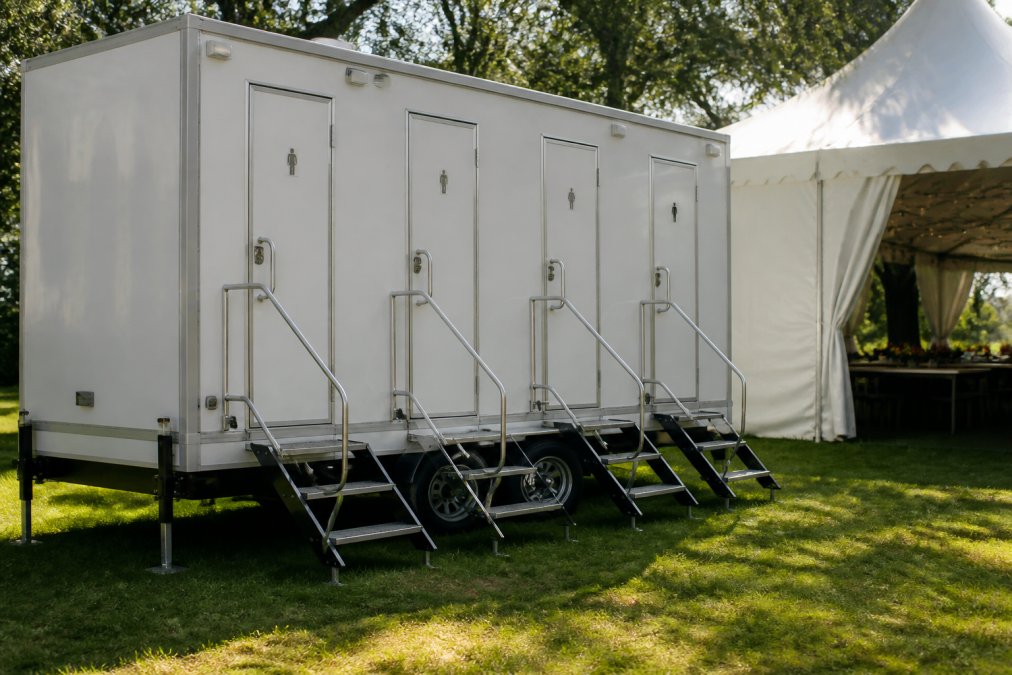
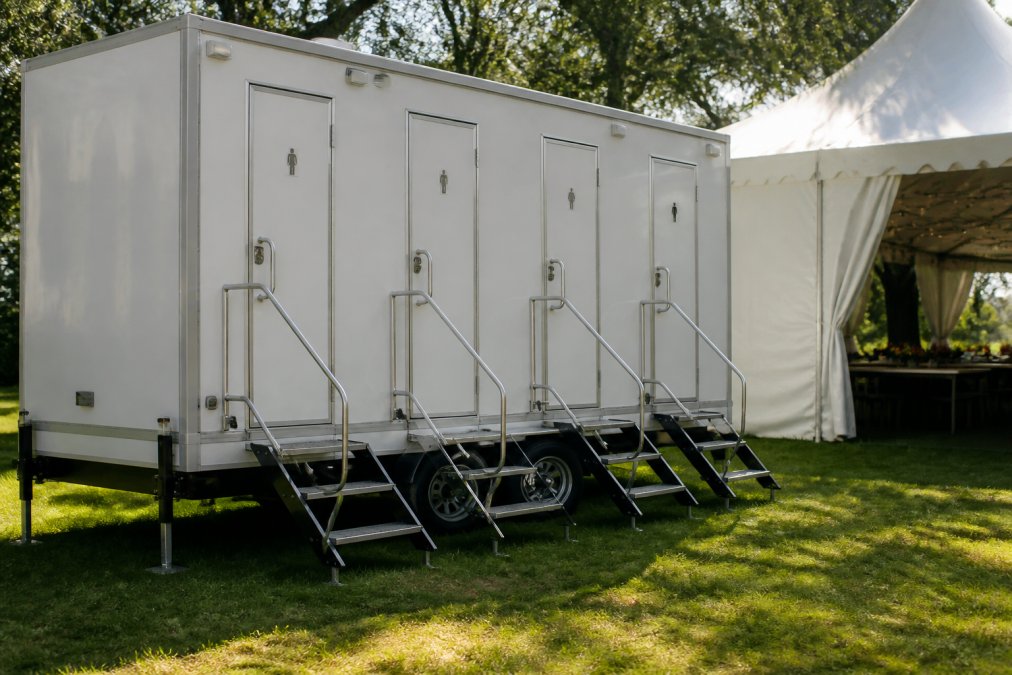
A restroom trailer is a self-contained, climate-controlled facility mounted on a towable chassis, offering running water, flush toilets, and interior lighting. Standard porta-potties are single-unit plastic enclosures with a holding tank and no running water. The difference matters most when guest comfort directly impacts your reputation.
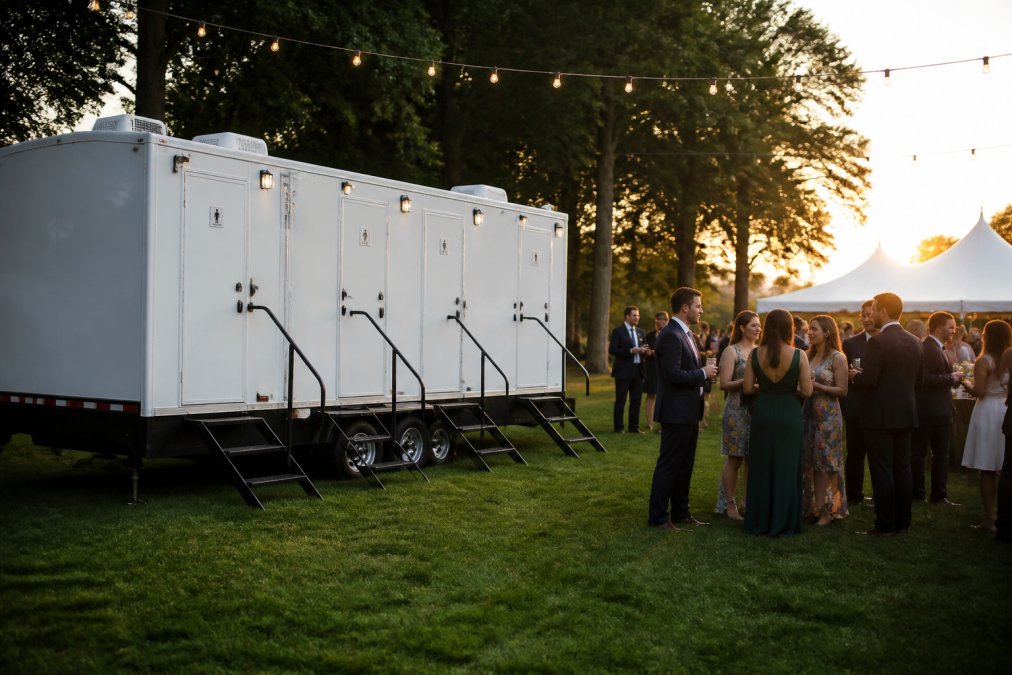
The US portable toilet rental industry generated $3.3 billion in revenue in 2025, per IBISWorld’s industry analysis, but that market is increasingly splitting between budget units and premium trailers. For events lasting more than four hours, or job sites where workers need to shower after shifts, a trailer with hot water supply and separate male and female stations delivers a fundamentally different experience. Guests remember a clean, well-lit restroom; they also remember the alternative.
Climate control is the clearest differentiator. Standard units become unbearable in July heat. A trailer with HVAC maintains a consistent interior temperature regardless of outdoor conditions, which is critical for weddings, festivals, and summer construction work.
Key Features to Compare in Mobile Restroom and Shower Trailer Rental Services
When comparing mobile restroom and shower trailer rental services, focus on five features that determine daily usability: station capacity, water systems, climate control, waste management, and interior quality.
Fresh water tanks and grey water holding tanks dictate how long a unit can operate before servicing. A trailer with a larger fresh water tank supports continuous flushing and shower use without frequent refills. Waste disposal capacity matters just as much; a full black water tank shuts down the entire unit.
Water pressure and hot water supply are non-negotiable for shower trailers. Guests and workers expect consistent pressure and adequate hot water for consecutive showers. Ask providers about recovery time between showers, not just tank size.
HVAC capability separates premium operators from budget rental services. Climate-controlled units with heating and air conditioning protect guests from extreme weather and prevent the interior odors that plague unventilated porta-potties. Interior quality, including lighting, mirrors, and finishes, signals whether a provider maintains its fleet professionally.
Breaking Down Portable Restroom Trailer Rental Cost
Your rental cost depends on the number of stations, delivery distance, rental duration, and shower capabilities. Peak season demand runs from May through September, driving prices higher.
| Cost Factor | Impact on Price | Planning Tip |
|---|---|---|
| Station count | Higher capacity = higher cost | Match stations to guest count, not budget |
| Climate control | Adds premium to base rate | Non-negotiable for summer or winter events |
| Delivery distance | Fuel and labor surcharges | Confirm mileage fees before booking |
| Shower capability | Increases water and waste needs | Only rent if genuinely needed |
| Peak season dates | May-September demand spike | Book 4-6 weeks ahead for best rates |
A low quote often signals deferred maintenance. Verify that the provider services units before every delivery and carries spare units for same-day replacement. A $200 savings is not worth a mid-reception breakdown.
Understanding ADA Compliant Restroom Trailer Requirements
ADA compliant restroom trailers must meet specific accessibility standards, including door width for wheelchair passage, interior turning radius, grab bars, and accessible sink heights, as defined under the Americans with Disabilities Act.
When evaluating an ADA unit, ask for the exact interior dimensions. A compliant trailer requires a minimum turning radius of 60 inches for a wheelchair to maneuver. The entry ramp must have the correct slope, and the door must be operable without tight grasping or twisting.
For event planners, the ADA obligation extends beyond having a compliant unit available. The trailer must be placed on firm, stable ground with an accessible path from the main event area; verify the provider levels the unit correctly, since an improperly positioned ramp can render it unusable.
Confirm ADA compliance in writing before booking. Ask for the unit’s specifications, not just verbal assurance that it meets requirements.
Your Event Restroom Trailer Planning Guide: Sizing and Layout
The general rule for event restroom planning is one station per 75 to 100 guests for a four-hour event, adjusting for alcohol consumption and peak usage windows. A 250-person wedding typically needs three to four stations to prevent lines.
Weddings with an open bar generate 30 to 50 percent more restroom visits than dry events. Festivals with continuous admission need capacity planning across the entire day, not just peak windows.
Layout matters as much as count. Place trailers on firm, level ground within reasonable walking distance of the main gathering area. Avoid positioning them downhill from event spaces, where grey water disposal and delivery access become difficult. Confirm that the delivery truck can access the site, including gate width and turning radius.
Site Preparation Checklist: The Technical Details Most Guides Miss
A restroom trailer requires specific site conditions to function correctly. Use this checklist when scouting:
Ground Leveling and Surface
- Slope tolerance: Most trailers require a maximum slope of 1 to 2 degrees for proper operation. A steeper incline prevents the waste tanks from draining correctly and can cause the HVAC system to malfunction.
- Surface type: Asphalt, concrete, or compacted gravel are ideal. Soft grass or sand will shift under the trailer’s weight, causing the unit to settle unevenly. If you must use grass, request plywood pads from the provider to distribute the load.
- Access path: Measure the delivery route. A standard restroom trailer is 8.5 feet wide and up to 40 feet long. Check for low-hanging branches, tight corners, and gate widths of at least 10 feet.
Power Requirements
- Electrical hookup: Most climate-controlled trailers require a 30-amp or 50-amp power supply. A standard 110-volt household outlet is insufficient for HVAC and water heating systems.
- Generator sizing: If you are off-grid, the provider must supply a generator rated for the trailer’s peak load. Ask for the wattage draw of the specific unit you are renting. A unit with two AC units and an on-demand water heater can draw over 7,000 watts.
- Extension cord limitations: Never use a standard 100-foot household extension cord. Voltage drop over that distance will damage the trailer’s compressor. Use a heavy-duty cord rated for the amperage, and keep the run under 50 feet where possible.
Water Supply and Pressure
- Water pressure range: Most shower trailers require a minimum of 40 psi and a maximum of 80 psi. City water pressure often exceeds this, so you may need a pressure regulator. Ask the provider if they include one.
- Hookup proximity: The water supply line must reach the trailer’s inlet without kinking. A standard garden hose is not sufficient for shower trailers; they require a 3/4-inch supply line.
- Drainage: Confirm the grey water tank can be accessed by the service truck. If the trailer is placed in a fenced area, leave a clear path for the pump truck’s hose.
Walk the delivery route with a tape measure before booking. A trailer that cannot physically reach your site is the most common cause of last-minute cancellations and upgrade fees.
Placement for Service Access
- Service side clearance: The waste and water hookups are typically on the driver’s side of the trailer. Leave at least 4 feet of clearance on that side for the service technician to connect hoses.
- Distance from the event: While you want the trailer close to guests, keep it at least 50 feet from food service areas to avoid any potential odor crossover during tank servicing.
How We Evaluated Rental Services: Maintenance, Support, and Uptime
A rental service is only as good as its response when something goes wrong. The industry is seeing increased demand for climate-controlled and ADA-compliant units, along with expansion of shower trailer rentals for emergency response and training camps, according to United Site Services’ industry overview. Providers that maintain modern fleets and offer 24/7 dispatch support are better positioned to handle failures.
Maintenance standards vary widely. Premium providers service units before every delivery and restock supplies during multi-day events. Budget operators may only pump tanks between rentals, leaving your event responsible for mid-day maintenance.
Uptime guarantees matter for remote job sites where a breakdown means workers cannot shower or use facilities. Ask about the provider’s average response time and whether they keep spare units for immediate replacement.
Troubleshooting Common Issues: What to Do When Things Go Wrong
Even the best-maintained trailer can experience a mechanical issue. Here is a field guide for the most common failures.
Problem: Pump Failure or Constant Running Toilet
- Immediate check: Look for a foreign object blocking the flush valve. A single sanitary napkin or baby wipe can jam the macerator pump.
- What to do: Turn off the water supply to that specific toilet via the shut-off valve, usually located behind a small access panel. Do not continue flushing, as this will overflow the bowl.
- Service call: This is a repair that requires a technician. A quality provider will have a response time of under 2 hours for a call during event hours.
Problem: Loss of Power
- Immediate check: Verify the breaker on the trailer’s main panel has not tripped. If it has, reset it and monitor whether it trips again immediately.
- Generator failure: If you are running on a generator, check the fuel level and the generator’s own error code display. A generator that overheats will shut down automatically.
- What to do: If the breaker trips repeatedly, there is a short in the system. Do not keep resetting it. Call the provider and request a technician or a replacement unit.
Problem: No Hot Water in the Shower
- Immediate check: Confirm the water heater is turned on. Many units have a switch near the electrical panel that can be accidentally turned off during servicing.
- Recovery time: If the unit uses a tank-based heater, consecutive showers can deplete the hot water supply. Standard recovery time is 20 to 30 minutes. If you have back-to-back showers scheduled, you may need to space them out.
- What to do: If there is no hot water after 30 minutes, the heating element may have failed. This requires a service call.
Problem: Unusual Odors
- Immediate check: Ensure the grey water tank valve is fully closed. A partially open valve allows sewer gas to back up into the trailer.
- Chemical balance: The blue deodorizer in the black water tank needs to be replenished. If the unit was serviced more than 3 days before a high-traffic event, the chemical may have lost its effectiveness.
- What to do: Request a mid-event service visit to pump tanks and replenish chemicals. This is standard for events lasting longer than 6 hours.
Never attempt to unclog a toilet or access the waste tank yourself. Restroom trailer waste systems use macerator pumps that can cause serious injury. Always shut off the water and call the provider.
What to Ask Your Provider Before Signing
- What is your average response time for a service call during an event?
- Do you carry spare units for same-day replacement, or only spare parts?
- What is your protocol for a unit that fails after hours?
- Do you include mid-event servicing in the base rate for events over 6 hours?
Final Verdict: What to Look For Before You Book
Choosing the right rental service comes down to verifying three things: the condition of the actual unit you will receive, the provider’s maintenance and response protocols, and the total cost including delivery and servicing.
Before booking, request photos or a site visit of the specific trailer model. Confirm the station count matches your guest list, the climate control functions properly, and the ADA unit’s dimensions meet your needs. Ask for references from planners who have used the service during similar events.
Royal Thrones provides climate-controlled units with running water, heating, and air conditioning, alongside ADA-accessible options and 24-hour service. Get a Quick Quote and verify that your next event has the facilities your guests deserve.
Frequently Asked Questions
How much does it cost to rent a mobile restroom trailer?
Portable restroom trailer rental cost depends on several factors, including the size of the unit, the number of stations, the rental duration, and your location. A larger luxury unit with shower facilities will cost more than a smaller standard model. For a precise estimate tailored to your event date and guest count, request a quote directly from the rental service, as Royal Thrones offers customized pricing based on your specific needs.
Are mobile restroom trailers ADA compliant?
Yes, many mobile restroom trailer rental services offer ADA compliant restroom trailer options. These units are designed to meet the Americans with Disabilities Act (ADA) standards, which include wider doorways, ample interior space for wheelchair maneuverability, and grab bars. If you have guests with disabilities, it’s important to request an ADA compliant unit and confirm the specific layout and dimensions with the rental provider before your event.
How far in advance should I book a mobile restroom and shower trailer?
You should book your mobile restroom and shower trailer as soon as you have confirmed your event date and estimated guest count. Peak season, typically from May through September, sees the highest demand for outdoor weddings and festivals, so trailers can book up quickly. Booking at least 4 to 6 weeks in advance is a good rule of thumb, but for large events or those during peak season, booking several months ahead is safer.
What is the difference between standard portable toilets and restroom trailers?
Standard portable toilets are self-contained units that lack running water and climate control. Restroom trailers offer a significantly higher level of comfort and hospitality. They feature flushing toilets, running water in sinks, interior lighting, and climate control with heating and air conditioning. This makes them a more suitable choice for formal events like weddings or for job sites where worker comfort and sanitation are a priority.